
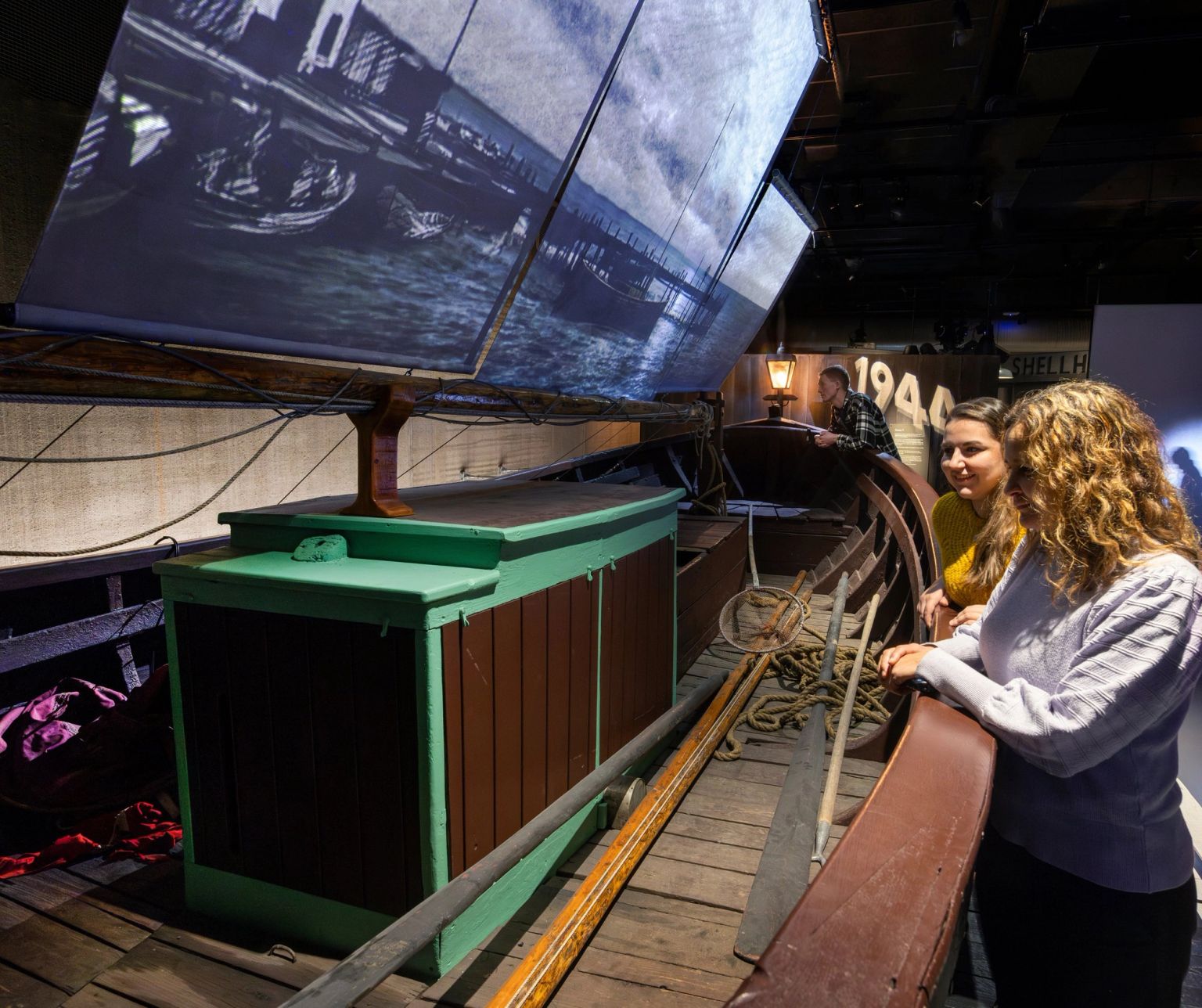
From gruesome execution pillars to bullet-riddled coats. The museum is full of objects that tell the dramatic story of the time when Denmark was occupied.
Go down underground and embark on a journey back to Denmark during the occupation – and get up close to the Danish resistance movement in World War II. Here are ten selected items, each telling a story about the men and women who chose to resist. See them on your next visit.
1.
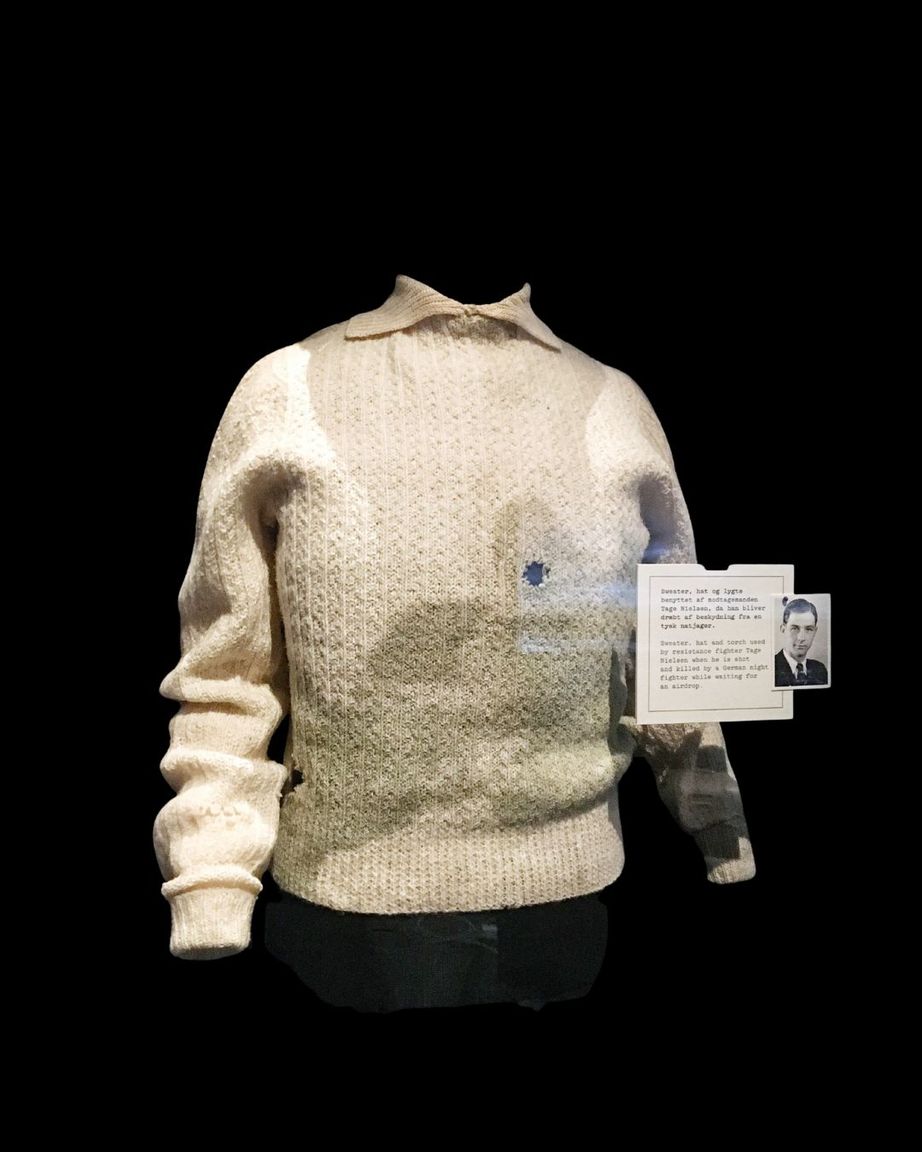
A fatal mistake
On a dark April night in 1945, 29-year-old Tage Marius Nielsen makes a fatal mistake. He is a receiver and is supposed to morse signals to the British planes that are to drop weapons to the resistance movement. Tage hears a plane and thinks it is the British. With his flashlight he signals to the plane where it should drop its load of weapons. But instead of a container of weapons, the plane sends a hail of bullets toward the young man. It is not a British plane Tage has signaled to. It is a German night fighter, which now delivers a deadly reply. See his bullet-riddled sweater from that fatal night.
2.
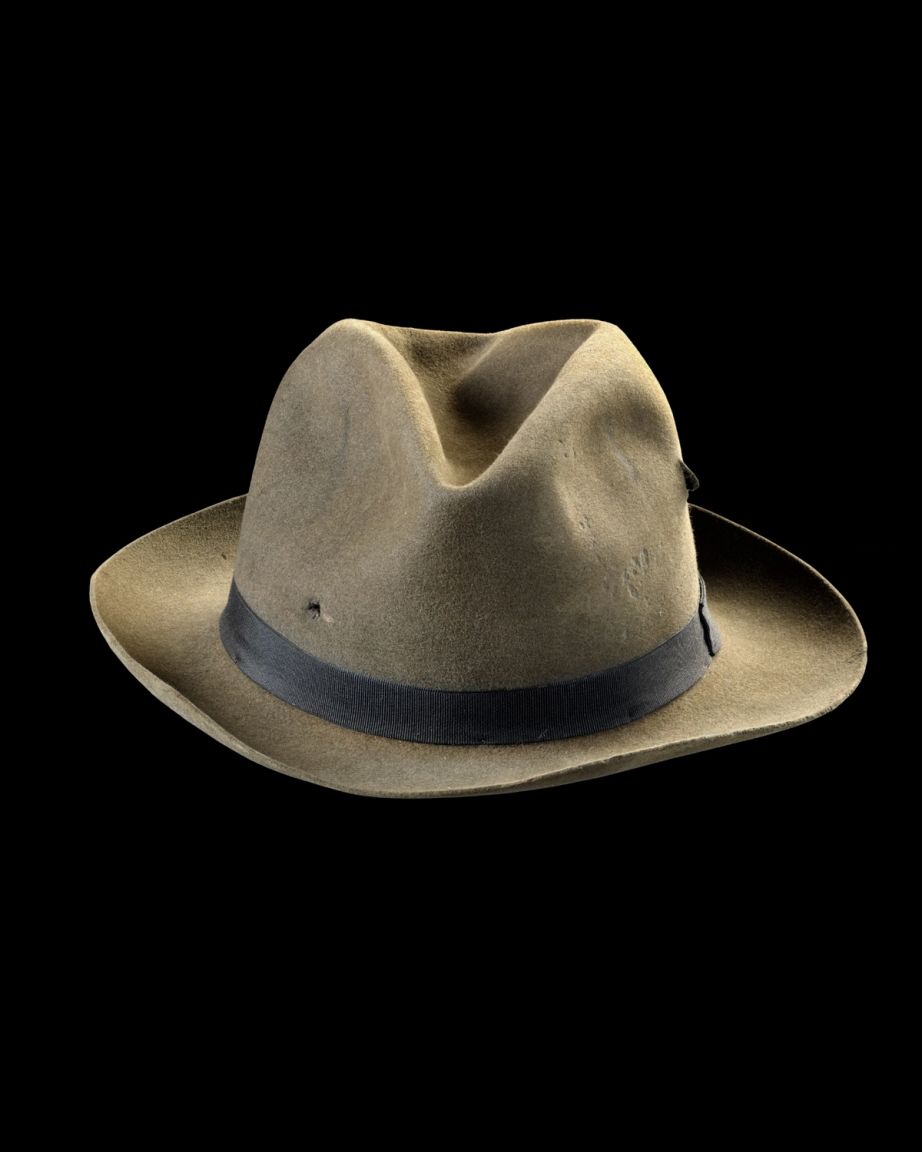
The Bullet of Vengeance
If you look closely at the picture, you can see a small hole in the hat. That’s where the bullet passes through when editor Laurids V. Jensen is brutally killed by the Danish-German terrorist group the Peter Group. Shot in the back of the head in the stairwell of his own building. Laurids V. Jensen has fallen victim to a reprisal killing, which is the occupying power’s revenge for resistance actions such as sabotage or the liquidation of German soldiers and Danes serving the Germans. See his bullet-riddled hat at the museum.
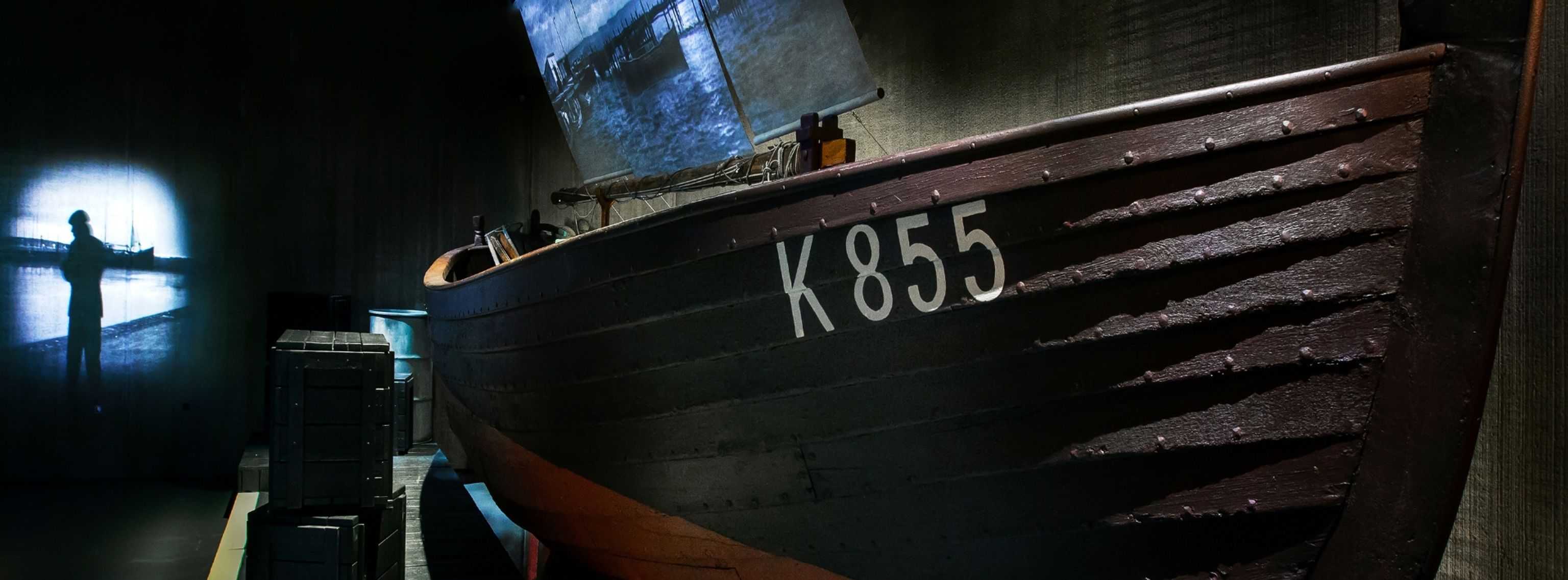
3. Sailed to safety
Under cover of darkness, the fishing boat Ternen sails out from the small peninsula Stevns. Hidden inside are two Jewish families fleeing the horrors of the Nazis. They are on their way to Sweden – to safety. But suddenly, a threatening flash of light sweeps across the water. See Ternen in the exhibition and learn the story of Abraham and his family.
4.
War Beneath the Waves
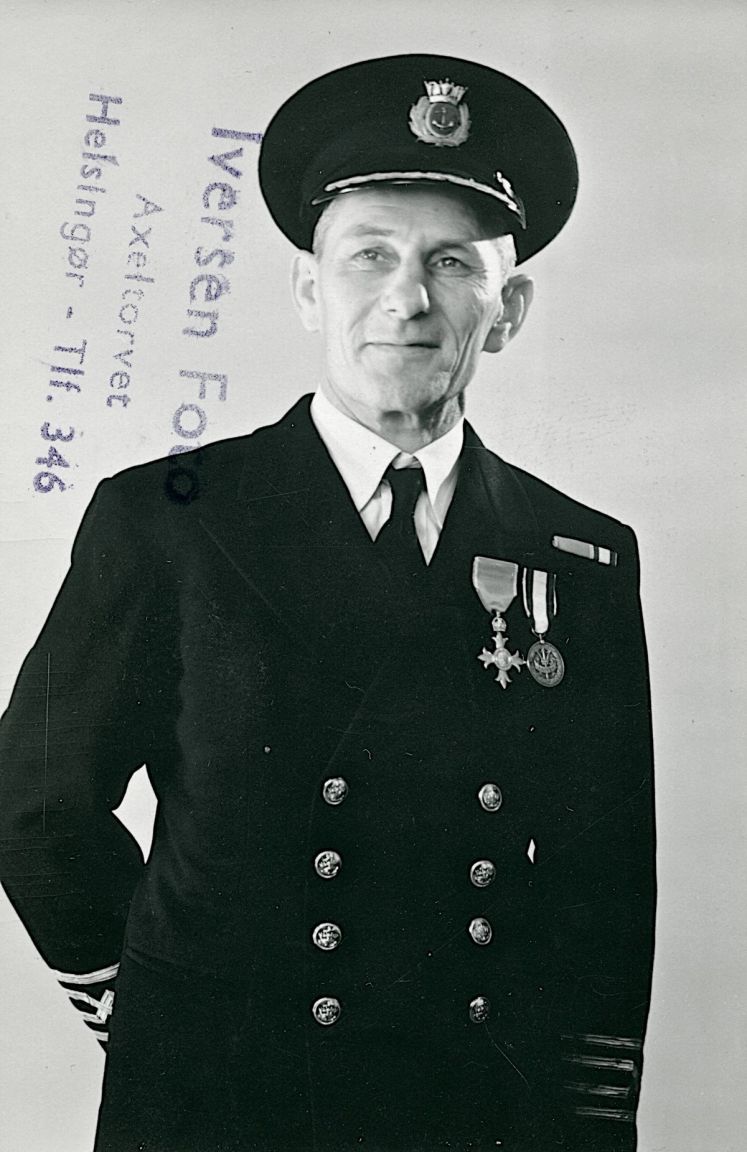
Suddenly, First Officer Martin Bantz hears a deafening crash. In an instant, the water is transformed into a blazing sea of fire. Everything shakes, windows shatter, and the lights go out. They have been hit by a German submarine. He is one of the roughly 6,000 Danish seamen who sail for the Allies during World War II. It is extremely dangerous because of the many hostile German submarines that deliberately target the convoys to sink them. Around 130 Danish merchant ships are sunk, and about 850 Danish seamen lose their lives. See Martin Bantz’s uniform at the museum.
5.
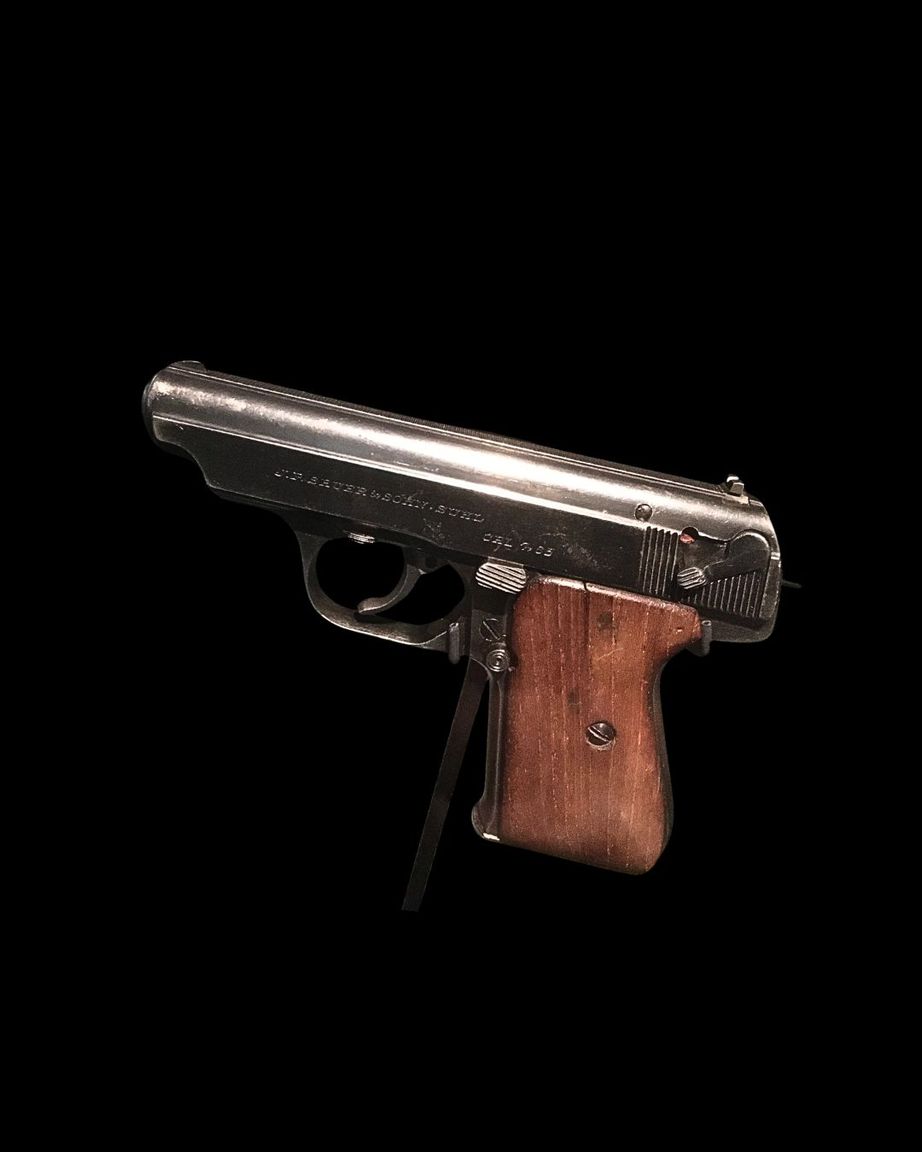
On the run in a hail of bullets
In the best James Bond style, the resistance fighter KK runs in a zigzag pattern to escape the bullets from the German police officer. During an arrest, KK manages to shoot the officer through his coat pocket, but he doesn’t die and now fires back at KK. His coat is hit several times, but miraculously KK himself avoids being shot and manages to get away on a tram that passes by at just the right moment. See his bullet-riddled coat and the pistol from that dramatic day.
Image gallery

1 / 4
6. The key to freedom
The famous resistance fighter Citronen was heavily sought after by the Gestapo. Because of this, he needed to be able to get into countless hideouts to stash weapons, explosives, and refugees. He therefore walked around carrying this huge bunch of keys on him, so he always had a hiding place available.
2 / 4
7. The 1.97 kg revolution
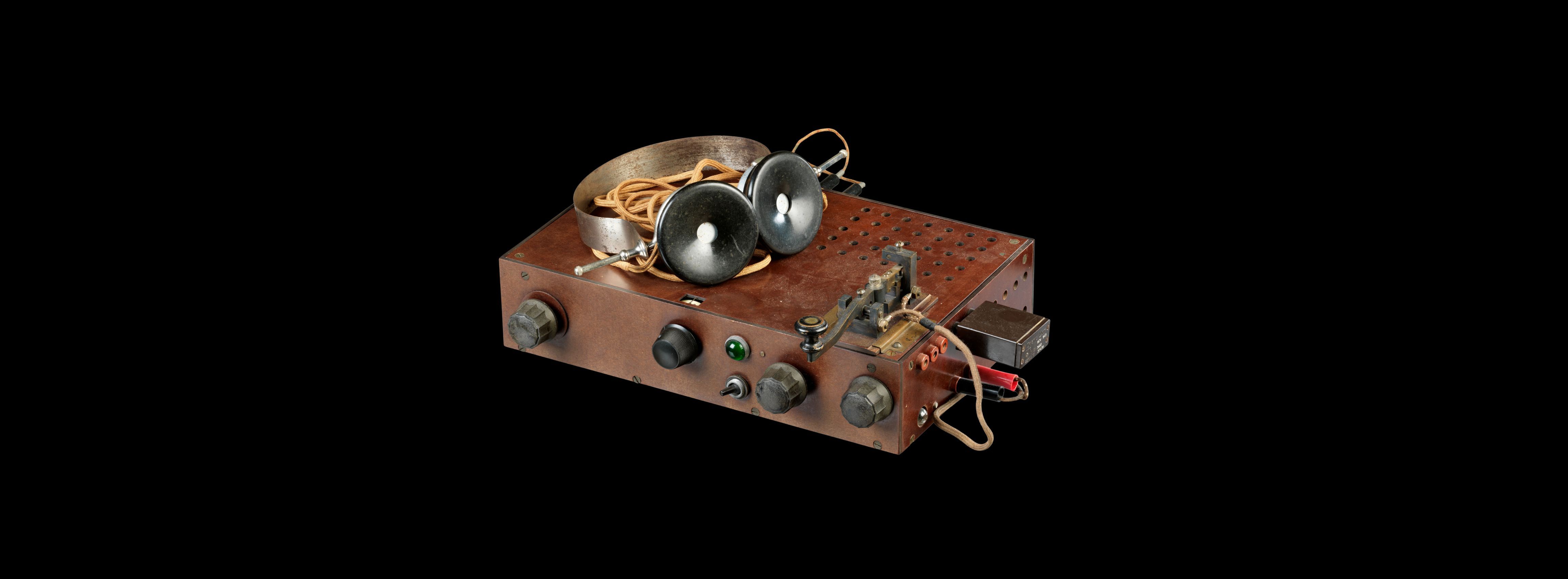
In 1943, radio engineer Lorens Arne Duus Hansen creates a truly unique invention: the so‑called telephone book radio, which weighs only 1.97 kilos and is no larger than a telephone book. It is a huge step forward for the illegal telegraph operators, who until now have had to hide radios weighing up to 20 kilos.

3 / 4
8. The Most Secret Delivery
The resistance movement had to be creative when sending secret microfilm to the British. The resistance woman Edith Bonnesen traveled from Malmö in Sweden to Copenhagen with this anus-cartridge hidden in her rectum. Inside was an illegal microfilm. The cartridge measures 6.5 cm and is 2 cm in diameter.

4 / 4
9. Together Forever
The Jewish siblings Bolette and Oscar Levy survive their stay in the Theresienstadt concentration camp. When they are rescued, Bolette takes some bed sheets with her. She sews two placemats from them and embroiders her and Oscar’s names on them. When he dies ten years later, she sews them together into one.
10. Pillars of Death
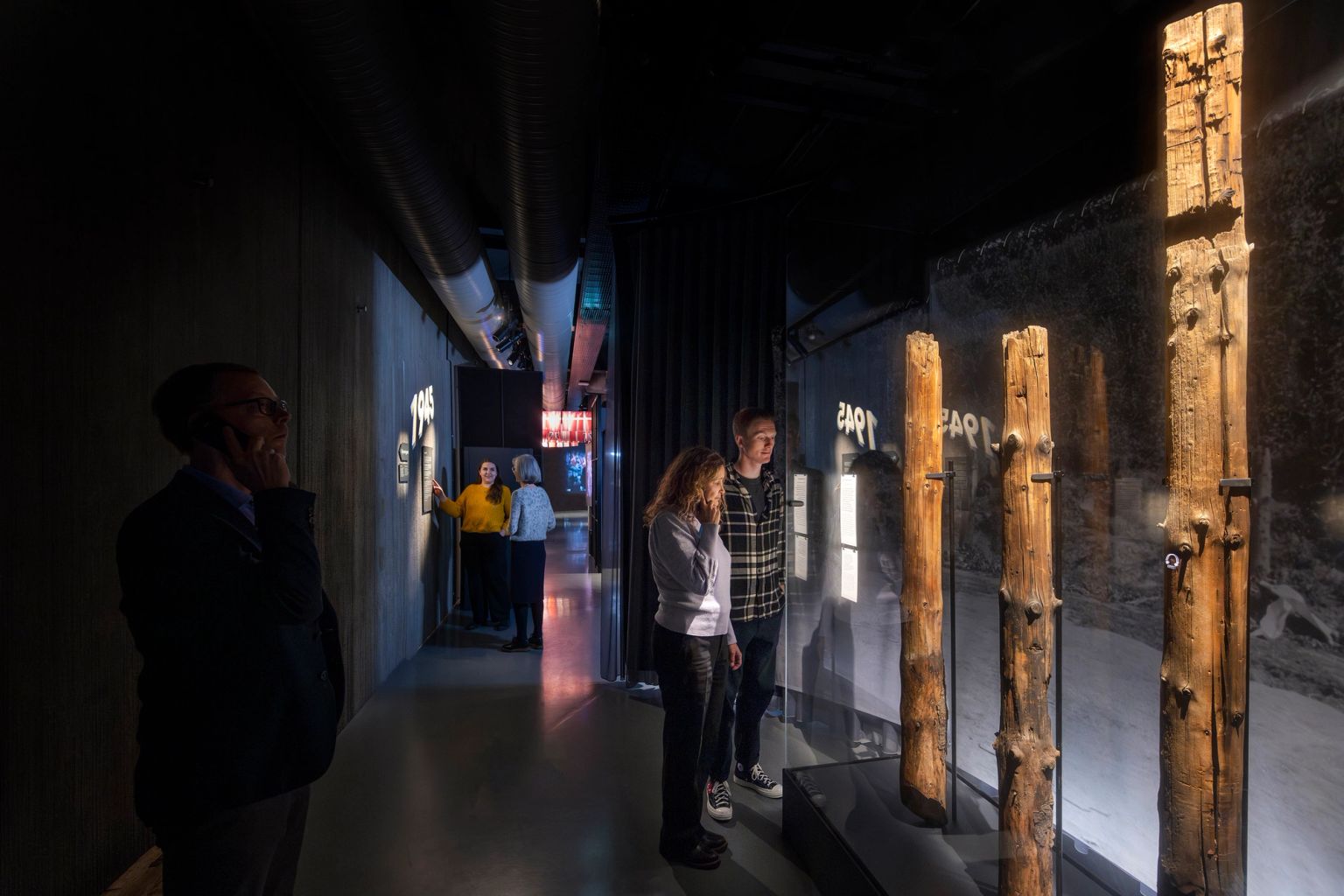
With their hands tied behind their backs, the condemned resistance members stand against the three pine stakes. The German soldiers take aim with their rifles and pull the trigger. At the Museum of Danish Resistance, you can see the original execution pillars used by the occupying forces to carry out death sentences against their enemies. You can listen to some of the farewell letters that those condemned to death wrote to their loved ones before their execution.