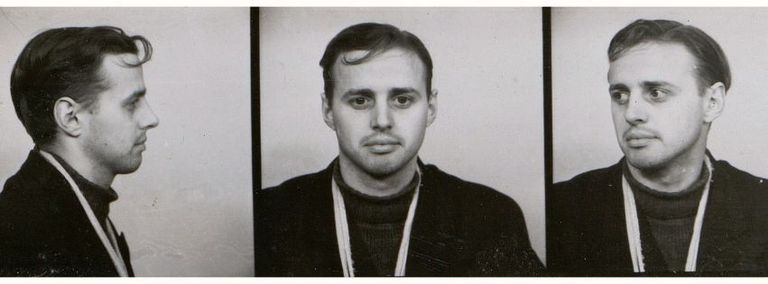
The Danish occupation
19401945
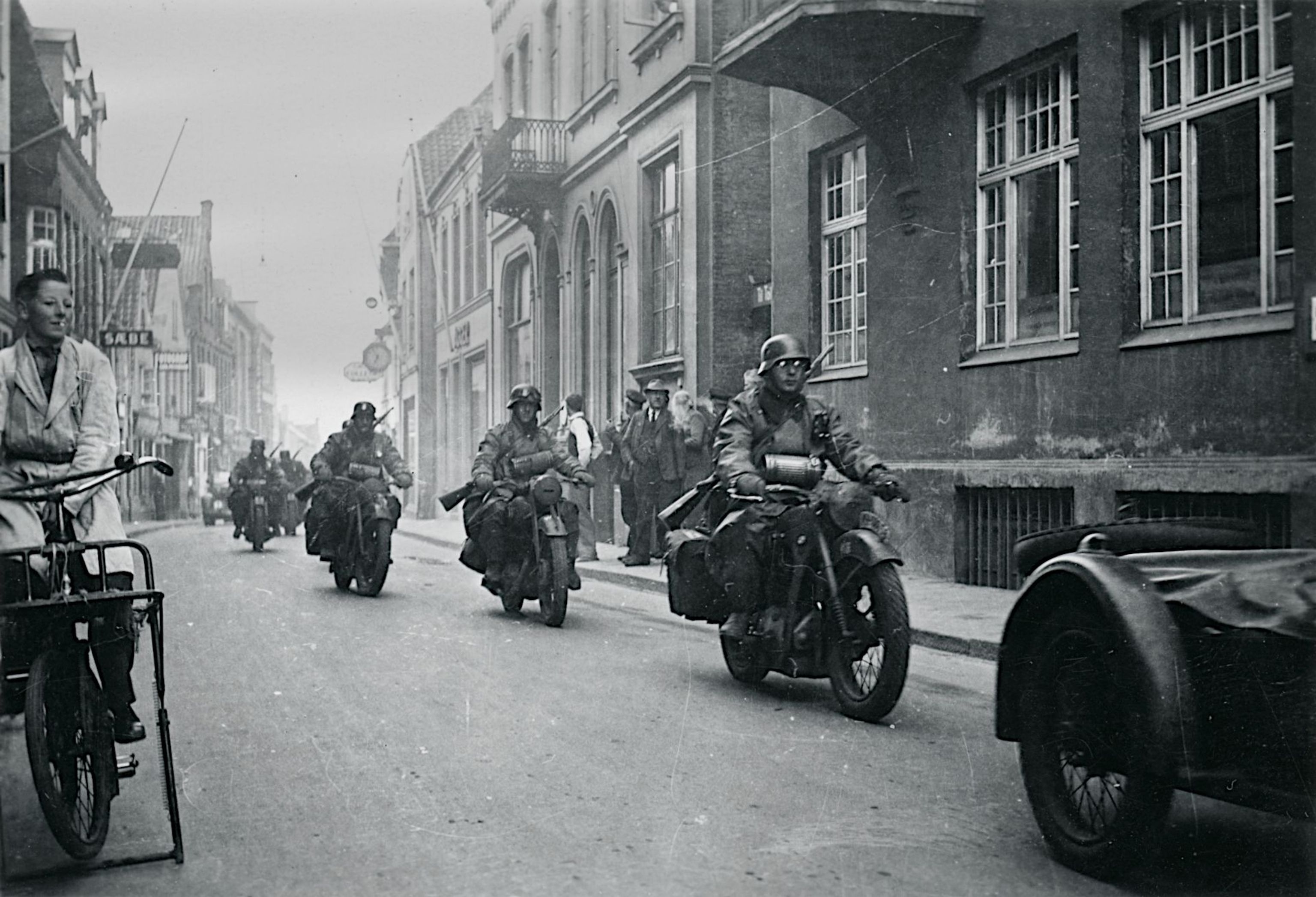
- When does the occupation take place?
- 9 April 1940. Germany occupies Denmark after a few hours of fighting.
- How long?
- For 5 years, Denmark was occupied by the Germans.
- When did the occupation end?
- Denmark receives the message of liberation on 4 May 1945. But Bornholm is not liberated until 5 April 1946.
For five years, Denmark was occupied by Nazi Germany. Every Dane had to choose: close your eyes, collaborate, or resist. Get the brief story of a country that balanced cooperation and rebellion, and of the people whose choices still spark debate today.
1.
When Denmark was occupied
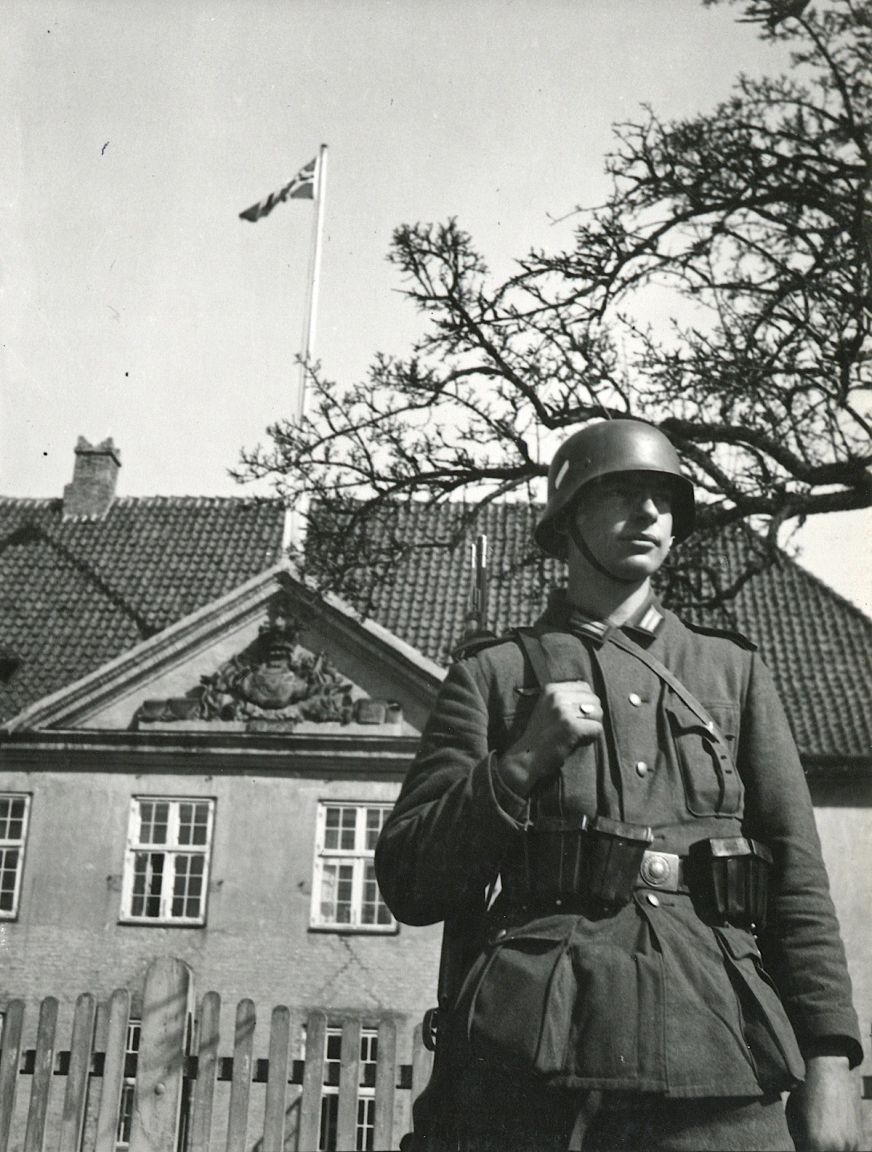
Early in the morning of April 9, 1940, German troops crossed the border while planes dropped leaflets over Copenhagen. After a few hours of fighting and 16 Danish soldiers killed, the government decided to surrender. The enemy’s superiority was overwhelming, and the fear of bombings of Danish cities was very real. Thus Denmark became an occupied country under Nazi control, but one in which the government, the king, and the authorities were allowed to remain in place in return for cooperating with the occupying power.
2.
Everyday life changes
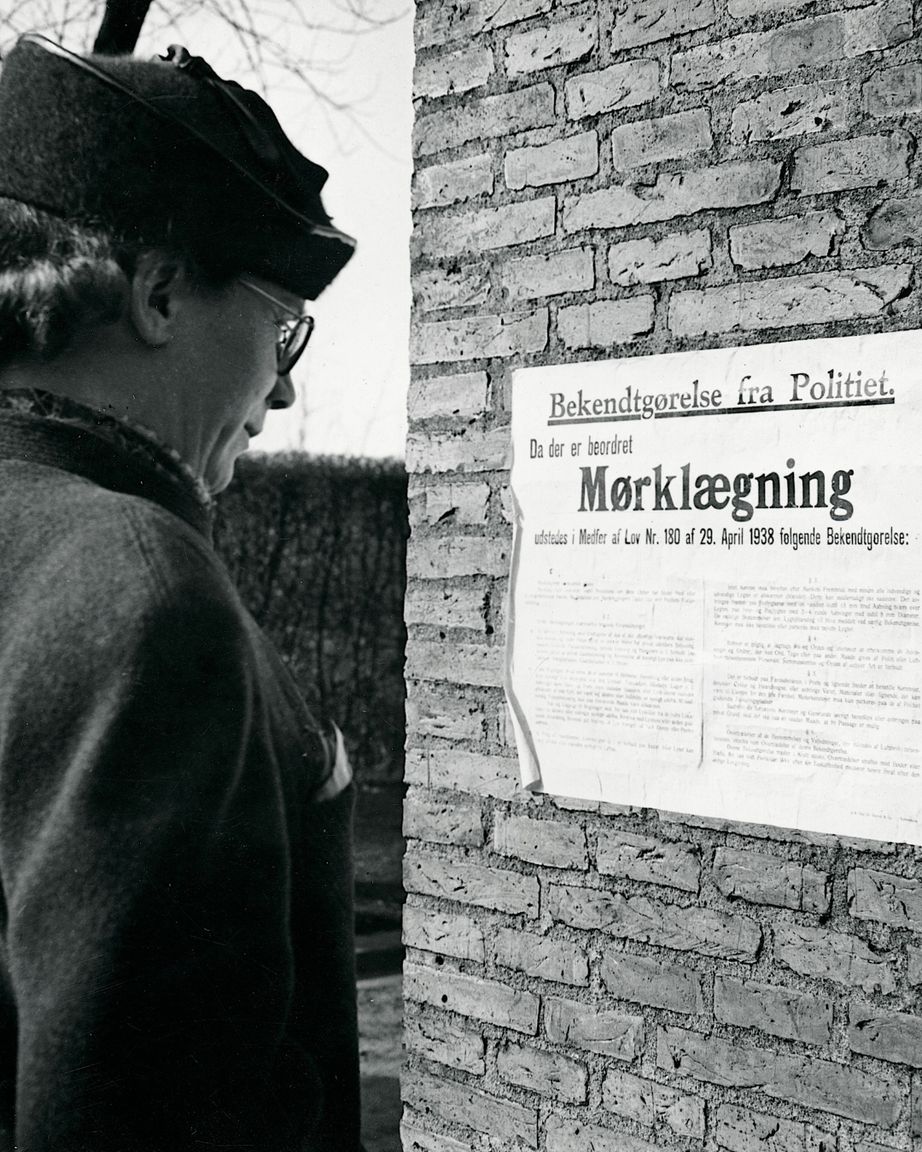
The price of cooperation was that everyday life could apparently continue as before, but only apparently. Blackouts, ration cards, air-raid sirens and closed borders became part of life, and many began to feel like prisoners in their own country. And while Danish agricultural and industrial goods rolled south as part of the economic agreement with the occupying power, housewives had to learn to make shoes from fish skin and coffee from chicory roots.
3.
The resistance starts slowly
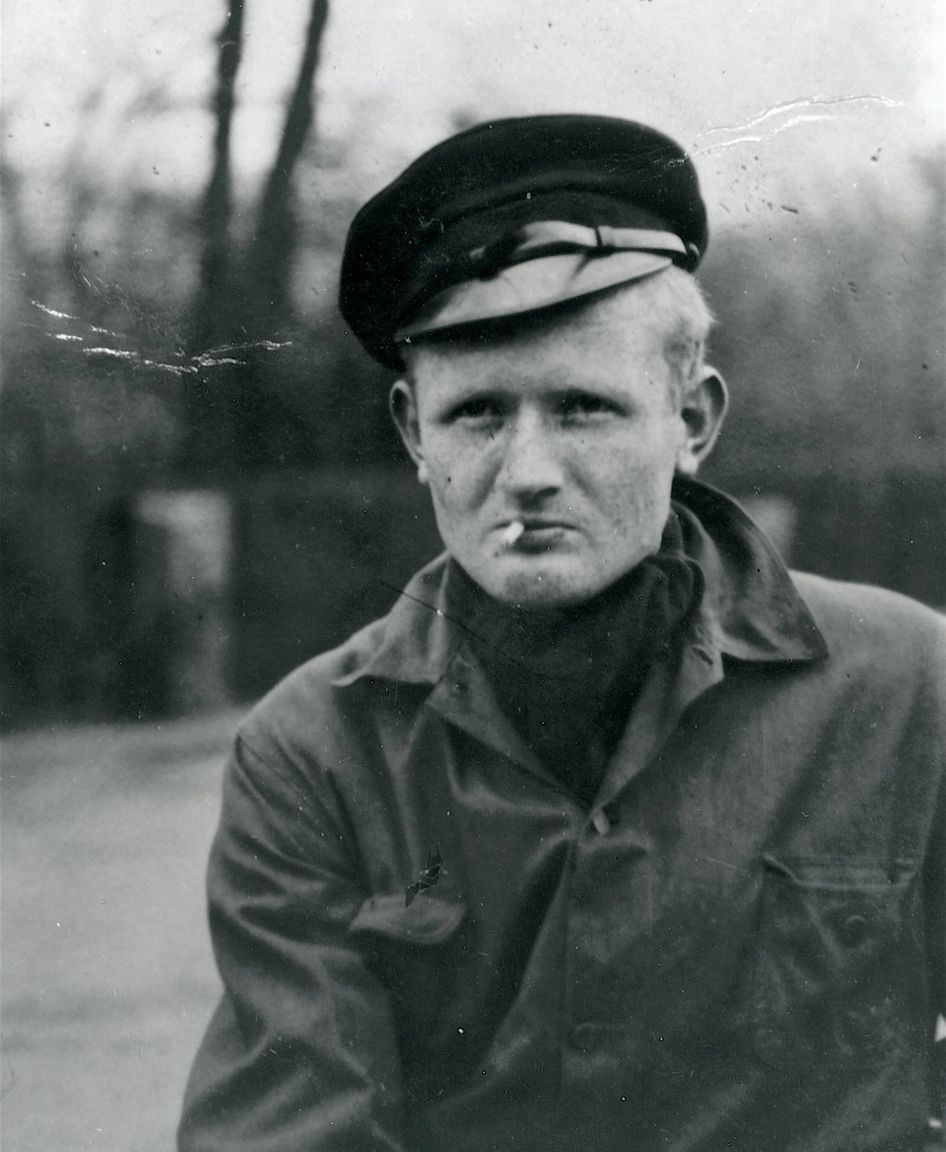
The first resistance fighters came from the political extremes – communists who defied the party line, and national conservatives who could not live with the policy of cooperation. From 1941–42 the illegal newspapers began to circulate and the first, primitive acts of sabotage took place, often carried out by young people using homemade bombs made from water pipes and pocket watches. Gradually, various resistance organizations were built up, and British SOE agents began to be dropped by parachute with weapons and explosives. But still only a small minority chose to join the resistance.
4.
The Danish dilemma: Collaborate or combat?
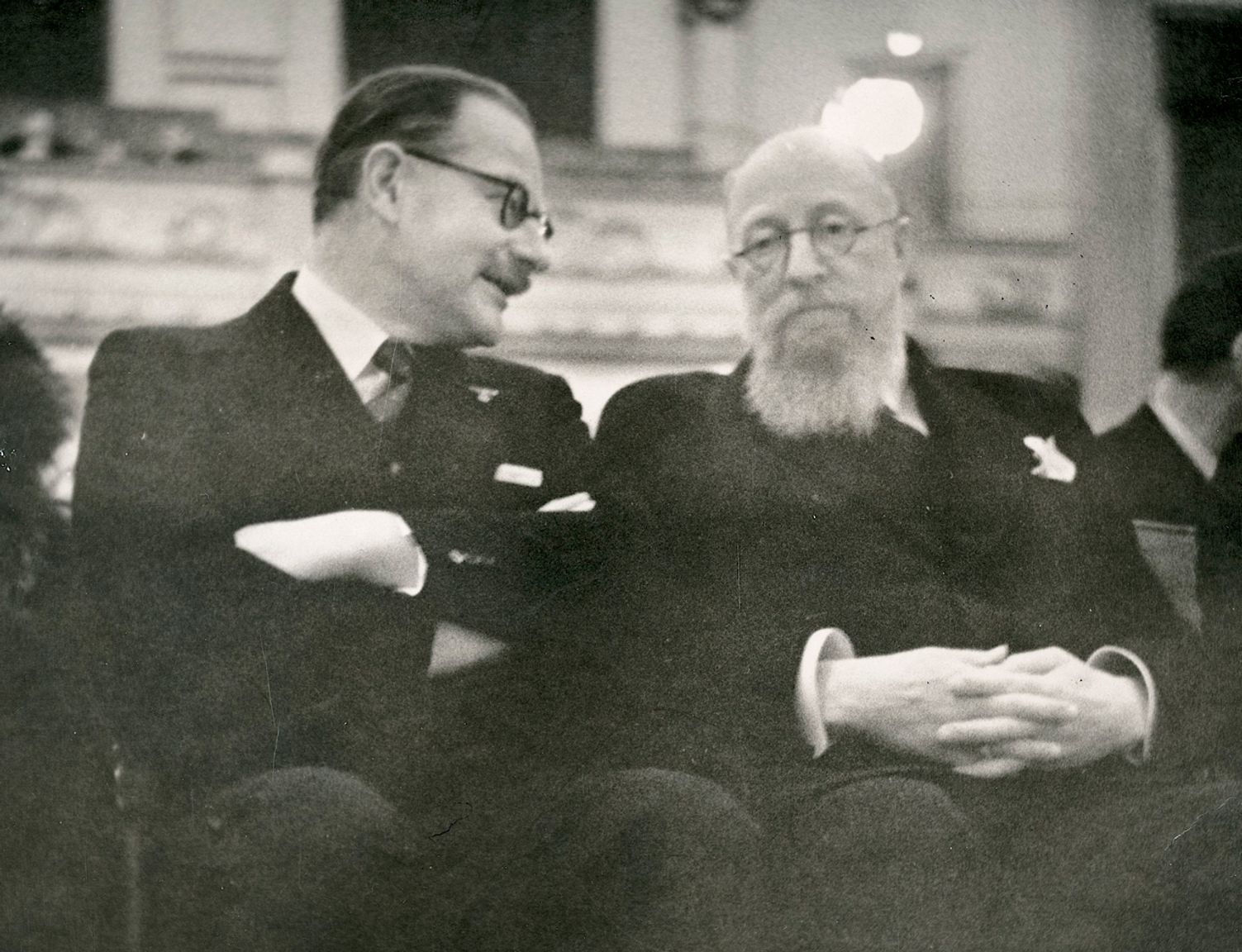
Behind the policy of cooperation lay a cold calculation: by giving the Germans something, one might be able to keep the rest – democracy, the rule of law, the king, and Danish self-determination. The largest parties formed a unity government intended to keep both the occupying power and the Danish Nazis in the DNSAP at arm’s length, and in the election of March 1943 the voters gave them an overwhelming mandate with 89.5 percent of the votes. But for the resistance fighters, the cooperation was treason, and the question of where the line ran between necessary adaptation and collaboration has haunted Denmark long after the end of the war.
5.
The mood shifts in 1943
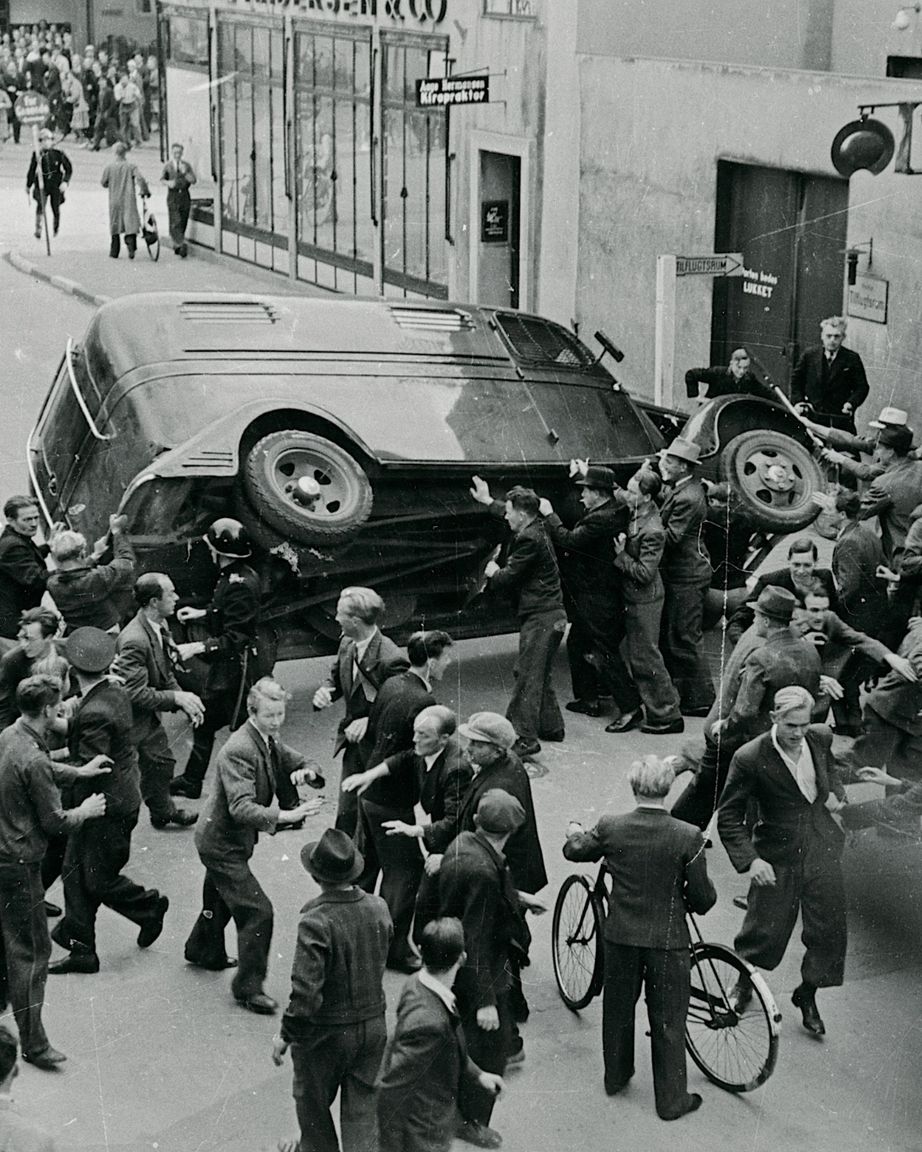
As German defeats piled up at Stalingrad and in North Africa, the Danes began to sense that the tide had turned. In August 1943, the August Uprising broke out with strikes and street battles in Esbjerg, Odense, Aalborg, and a number of other cities, where anger was now openly directed at the Germans and their Danish collaborators. When the Germans demanded the death penalty for sabotage, the government said stop, and on 29 August it ceased to function. The Germans declared a state of emergency, and the Danish navy scuttled its own ships so they would not fall into enemy hands.
6.
Increased resistance and German repression
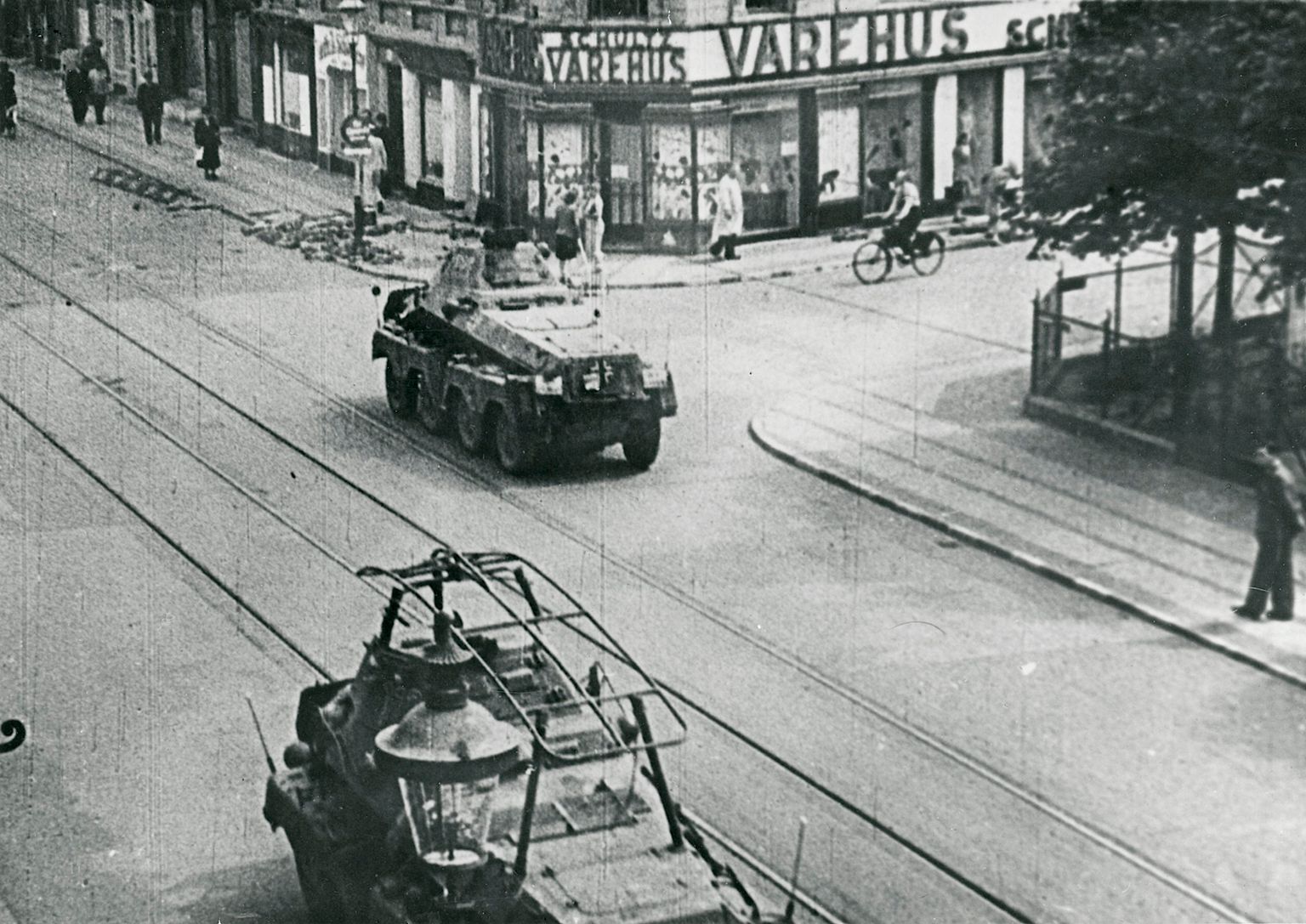
Without a government to contain the conflict, the second half of the occupation became significantly harsher. The German police, the Gestapo, intervened directly with arrests, torture, and executions. In retaliation for the resistance movement’s acts of sabotage, the Germans also launched so-called counter-terror, including the bombing of newspaper offices and entertainment venues such as Tivoli, as well as the killing of random, innocent Danes. In October 1943, the Germans attempted to deport the Danish Jews, but an extraordinary rescue operation brought more than 7,000 people to safety in Sweden, while 485 were sent to the Theresienstadt concentration camp.
7.
The last lawless time
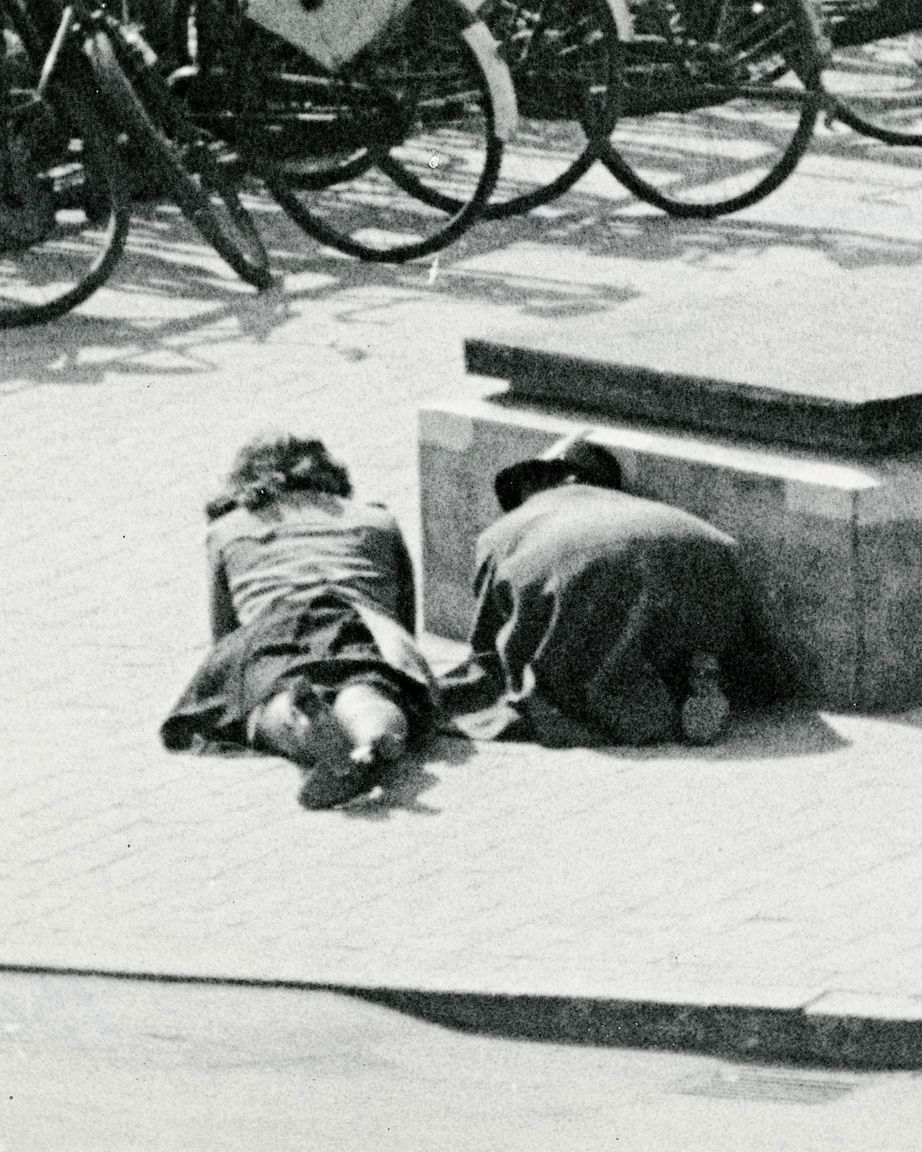
On 19 September 1944, the Germans dissolved the Danish police force and deported around 2,000 officers to concentration camps in Germany. Back in Denmark, municipal guard units and a German-controlled auxiliary police force, the HIPO, were set to maintain order. Crime exploded, and executions and reprisal killings became part of everyday life. In the final months, German refugees streamed north across the border, while white Red Cross buses brought Danish and Norwegian prisoners home from the horrors of the concentration camps in Germany. Everyone waited to see how it would all end.
8.
Liberation – freedom with mixed feelings
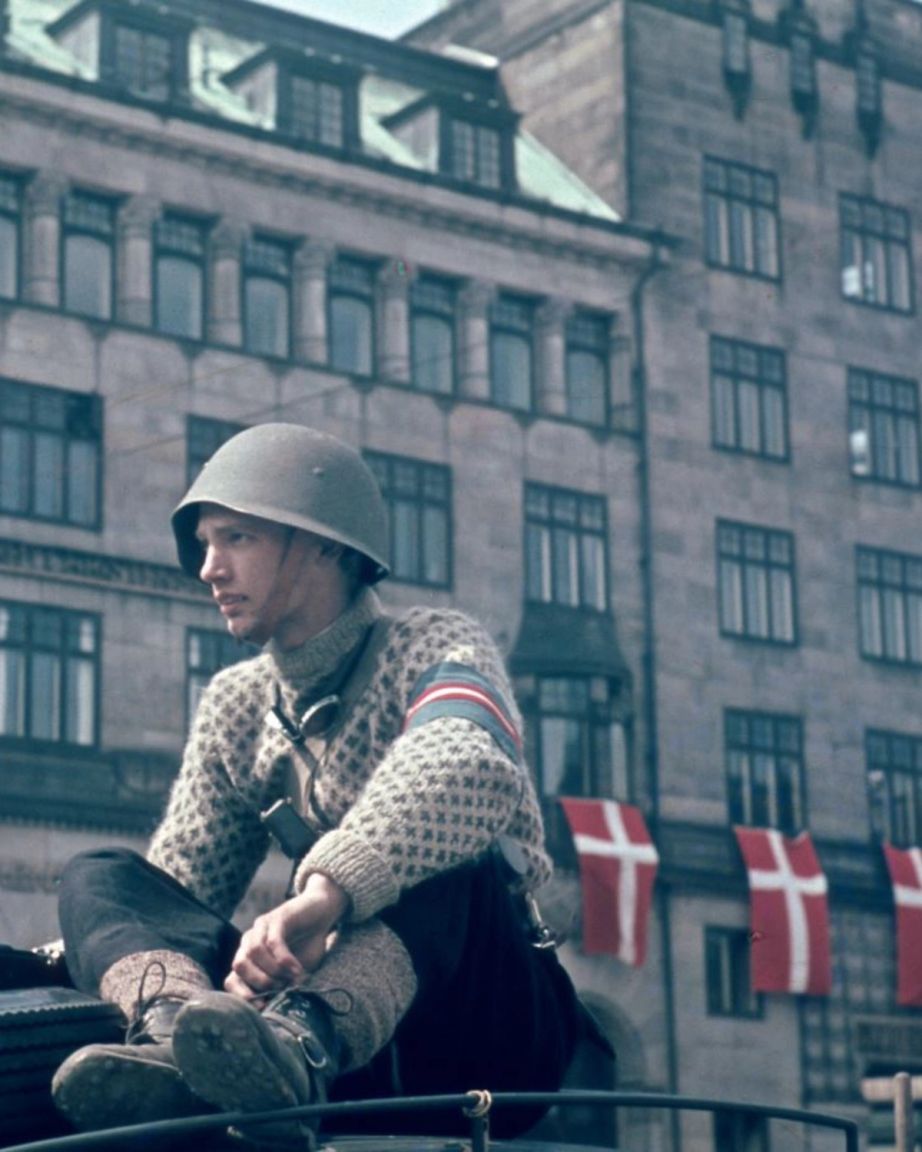
At 20:35 PM on 4 May 1945, the announcement came over the BBC: The German troops in Denmark had surrendered. Jubilation broke out, and resistance fighters stepped into full daylight wearing their armbands and carrying their weapons. But liberation also had a dark side. Suspected informers, collaborators and Danish girls who had dated German men were arrested and humiliated, and the island of Bornholm had to endure heavy bombardments and a new Soviet occupation. What remained was a country that now had to come to terms with itself: Who had done the right thing, who the wrong, and where the line had actually been drawn.
Step into history and the many difficult choices